

← ← Назад к статьям
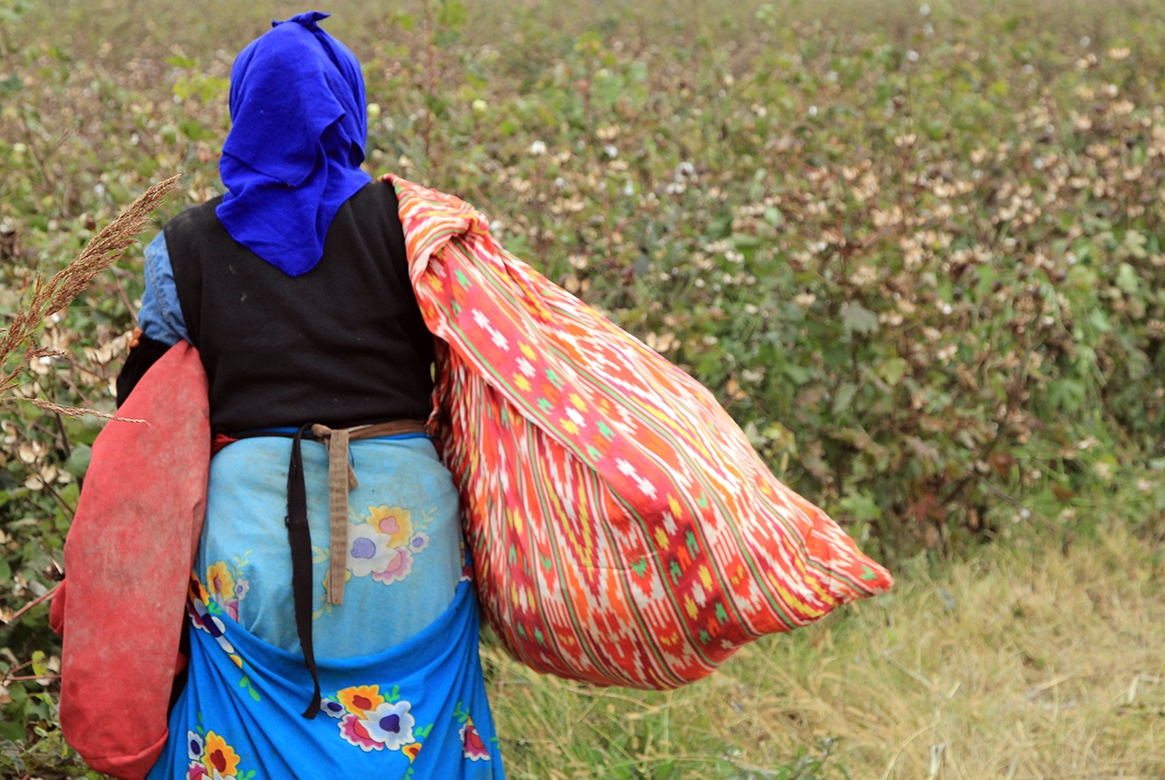
“Voluntary” obligation: teachers and students in Tajikistan continue to be sent to cotton fields
📅 24.10.2025
⏱️ 8 минут чтения
⭐ 5.0/5
Despite the recently passed law “On the Status of Teachers,” which is meant to raise the prestige of the profession and improve the working conditions of educators, teachers across the country are starting the school year not in classrooms, but in cotton fields. Their participation in the harvest is framed as "voluntary help to farmers," but in reality, refusing such work is often impossible. Along with teachers, students are also being recruited for cotton picking, violating laws that prohibit child labor.
Field instead of classrooms: students and teachers in the cotton harvest
It’s a regular workday, October 14. On the fields of the Abdurahim Jumayev Collective Farm in the Bobojon-Ghafourov district in Sughd province, dozens of women and children are working. Among them are local medical workers, as well as students and teachers from School No. 42 in the village of Kotma.
According to students in grades 5-6, classes have been replaced by fieldwork. The children work every other day. “Around 150 students go out to the fields every day. Each one has a norm of 10 kilograms of cotton. If there are 30 students in a class, the total amount that needs to be picked is 300 kilograms,” said one of the teachers.
Refusing to participate is not an option—“that’s the rule,” the teachers say. Cotton picking lasts for 10 days per group. The school explains that this is necessary to help farmers harvest before the cold weather sets in. Payment for the cotton harvested ranges from 1 to 1.5 somoni per kilogram, with prices set by the farmers themselves.
On another field, belonging to the Saidkhodja Urunkhodjaev Collective Farm, journalists noticed about 40 students and a dozen teachers. However, the landowners forbade them from talking to the press or filming the events. Despite this, it was revealed that teachers and students from School No. 27 were working there. The payment for the cotton picked is just 1 somoni per kilogram, the lowest rate among the districts visited.
In Spitamen district of Sughd province, students and teachers from School No. 9 are also involved in the cotton harvest. Grade 6 students work until lunchtime, while high school students work in the afternoon. “The only legitimate excuse for not participating is illness or another serious reason, which requires a doctor's note. I come home just to sleep. In the morning, it’s back to work, then to the fields. We all have families, children, and household chores,” one teacher complained.
City schools and private institutions: “help” without weekends
In the cities, the situation is only different in that students are not involved in the cotton harvest—teachers, however, are still forced to participate. A worker from a school in the city of Buston explained that schools are sent “quotas” specifying how many people must be sent to the fields. If someone cannot go, they are required to find a replacement. The important thing is to meet the necessary number of people.
“Earlier, teachers were only sent on weekends and for half a day. Now, it’s also on weekdays, right during lessons,” the teacher noted.
Not only state schools but also private educational institutions are being involved. A teacher from a private school in Khujand, the capital of Sughd province, shared that teachers are being sent to the cotton fields without being provided lunch, and transportation is often a problem. “Do they pay for the cotton picked? Not only do they not pay us, but they also criticize us for picking too little. I come home completely exhausted, with no strength or time to prepare lessons,” she admitted.
Almost all teachers agree to speak only anonymously due to fear of repercussions. Many look around cautiously before answering the journalists’ questions.
500 kg for a certificate: cotton becomes a “condition”
The Asia-Plus editorial office continues to receive complaints from teachers about being effectively forced into cotton picking. A resident of the Sughd province, who wished to remain anonymous, reported that refusing to participate could result in a reprimand, fines, or even dismissal. According to her, orders come from the education department and local authorities.
“It’s 100 kilometers to Asht, just one day off. And at home—there are notebooks to check, lesson plans to write, and a family to care for. Some people are just crying. One of our colleagues paid 150 somoni to a hired worker so he could go in her place. She has four children,” the teacher wrote.
In some areas, cotton picking has even become a condition for receiving official certificates. For instance, a resident of Konibodom district in Sughd province reported that his younger brother’s school certificate and his grandmother’s birth certificate for his granddaughter at the Civil Registry were not issued until 500 kilograms of cotton were picked.
A photo was attached to the message showing an official certificate from the head of the Pater village Jamoat, which explicitly stated that each family was given a cotton picking quota—500 kilograms. The requirement was presented as a “task” from the local authorities, allegedly based on the “recommendations of the president.”
Authorities: “it’s voluntary and for the support of farmers”
Local officials confirmed that teachers and students are indeed being involved in cotton picking. Dilorom Tursunzoda, the deputy chairperson of the Bobojon-Ghafourov district, stated that students participate outside of school hours—“after lessons.”
“Agree, it’s better to work than sit on the phone. The weather is good, the children get lunch, and a little extra money wouldn’t hurt. The faster we help harvest the cotton, the sooner the work will end,” Tursunzoda said in a phone interview with journalists.
According to her, no official document exists requiring teachers or students to participate in cotton picking—everything supposedly happens on a voluntary basis. Instances of coercion, she claims, are exceptions that occur in certain schools.
She added that not only teachers but also other government employees are being recruited to help farmers. “Bobojon-Ghafourov is the largest district in Sogd, we have a lot of land, but there aren’t enough professional harvesters,” explained Tursunzoda.
According to official information, over 49,000 hectares of land have been planted with cotton in Sughd province this year. The harvest began at the end of August, and in some districts, it will last until early December.
Despite cotton farming being considered a “strategic sector,” the economic reality is that cotton production is becoming increasingly unprofitable. Costs are rising, prices are falling, and fewer people are willing to work in the fields for minimal wages. Meanwhile, farmers are instructed to plant only cotton, and they receive no subsidies or real state support.
Economists note that the current procurement system works in the interests of intermediaries, not farmers. Without deep reforms, the cotton industry will continue to lose viability and importance.
Since 2009, the use of child labor in cotton picking has been officially prohibited in Tajikistan. The "Education Law" also explicitly forbids the involvement of students in agricultural work. According to Article 25, Paragraph 9, students cannot be involved in work that is not related to their educational process.
Nevertheless, every year, students and teachers start the school year in the fields. The so-called "voluntary help" effectively becomes a mandatory obligation. This not only violates rights but also puts children's lives at risk.
In November 2024, a truck carrying students from cotton fields overturned in the Bobojon-Ghafourov district—three children were seriously injured. In September 2021, a 15-year-old schoolgirl in the Zafarobod district of Sughd province was run over by a tractor while working in the cotton fields.
“This is not inaction—it’s active human rights violation”
Human rights activist Dilrabo Samadova notes that the issue of forced labor in Tajikistan has been discussed for two decades. Back in 2005, lawyers and activists in the Sogd region tried to stop the mass sending of students and teachers to the cotton fields. Despite existing bans, students were intimidated—threatened with expulsion or losing their budget-funded places.
Today, Samadova points out, the situation is repeating itself: even fifth-graders are being sent to the fields, daily quotas are being set, and this is all called “voluntary help.” “But this is not voluntary labor, it’s forced labor. And by law, minors cannot perform such hard physical work,” says the human rights defender.
What is especially concerning, she adds, is how systematically the process is organized. School administrations compile lists, arrange transportation, and report to education departments. This is not a spontaneous initiative but a well-coordinated mechanism orchestrated by state structures.
“When the state not only turns a blind eye but becomes the organizer of forced labor itself, this is no longer inaction, but a direct violation of human rights,” emphasizes Samadova.
She adds that freedom from forced labor is one of the few absolute rights that cannot be limited under any circumstances—whether for economic reasons, in the name of patriotism, or under the guise of “voluntariness.”
She also reminded that involving children in cotton picking violates both national labor laws and Tajikistan's international obligations under the conventions of the International Labour Organization (ILO).
“Twenty years have passed, but the essence remains the same: violence disguised as voluntariness is still alive,” Samadova concluded.
Despite the recently passed law “On the Status of Teachers,” which is meant to raise the prestige of the profession and improve the working conditions of educators, teachers across the country are starting the school year not in classrooms, but in cotton fields. Their participation in the harvest is framed as "voluntary help to farmers," but in reality, refusing such work is often impossible. Along with teachers, students are also being recruited for cotton picking, violating laws that prohibit child labor.
Field instead of classrooms: students and teachers in the cotton harvest
It’s a regular workday, October 14. On the fields of the Abdurahim Jumayev Collective Farm in the Bobojon-Ghafourov district in Sughd province, dozens of women and children are working. Among them are local medical workers, as well as students and teachers from School No. 42 in the village of Kotma.
According to students in grades 5-6, classes have been replaced by fieldwork. The children work every other day. “Around 150 students go out to the fields every day. Each one has a norm of 10 kilograms of cotton. If there are 30 students in a class, the total amount that needs to be picked is 300 kilograms,” said one of the teachers.
Refusing to participate is not an option—“that’s the rule,” the teachers say. Cotton picking lasts for 10 days per group. The school explains that this is necessary to help farmers harvest before the cold weather sets in. Payment for the cotton harvested ranges from 1 to 1.5 somoni per kilogram, with prices set by the farmers themselves.
On another field, belonging to the Saidkhodja Urunkhodjaev Collective Farm, journalists noticed about 40 students and a dozen teachers. However, the landowners forbade them from talking to the press or filming the events. Despite this, it was revealed that teachers and students from School No. 27 were working there. The payment for the cotton picked is just 1 somoni per kilogram, the lowest rate among the districts visited.
In Spitamen district of Sughd province, students and teachers from School No. 9 are also involved in the cotton harvest. Grade 6 students work until lunchtime, while high school students work in the afternoon. “The only legitimate excuse for not participating is illness or another serious reason, which requires a doctor's note. I come home just to sleep. In the morning, it’s back to work, then to the fields. We all have families, children, and household chores,” one teacher complained.
City schools and private institutions: “help” without weekends
In the cities, the situation is only different in that students are not involved in the cotton harvest—teachers, however, are still forced to participate. A worker from a school in the city of Buston explained that schools are sent “quotas” specifying how many people must be sent to the fields. If someone cannot go, they are required to find a replacement. The important thing is to meet the necessary number of people.
“Earlier, teachers were only sent on weekends and for half a day. Now, it’s also on weekdays, right during lessons,” the teacher noted.
Not only state schools but also private educational institutions are being involved. A teacher from a private school in Khujand, the capital of Sughd province, shared that teachers are being sent to the cotton fields without being provided lunch, and transportation is often a problem. “Do they pay for the cotton picked? Not only do they not pay us, but they also criticize us for picking too little. I come home completely exhausted, with no strength or time to prepare lessons,” she admitted.
Almost all teachers agree to speak only anonymously due to fear of repercussions. Many look around cautiously before answering the journalists’ questions.
500 kg for a certificate: cotton becomes a “condition”
The Asia-Plus editorial office continues to receive complaints from teachers about being effectively forced into cotton picking. A resident of the Sughd province, who wished to remain anonymous, reported that refusing to participate could result in a reprimand, fines, or even dismissal. According to her, orders come from the education department and local authorities.
“It’s 100 kilometers to Asht, just one day off. And at home—there are notebooks to check, lesson plans to write, and a family to care for. Some people are just crying. One of our colleagues paid 150 somoni to a hired worker so he could go in her place. She has four children,” the teacher wrote.
In some areas, cotton picking has even become a condition for receiving official certificates. For instance, a resident of Konibodom district in Sughd province reported that his younger brother’s school certificate and his grandmother’s birth certificate for his granddaughter at the Civil Registry were not issued until 500 kilograms of cotton were picked.
A photo was attached to the message showing an official certificate from the head of the Pater village Jamoat, which explicitly stated that each family was given a cotton picking quota—500 kilograms. The requirement was presented as a “task” from the local authorities, allegedly based on the “recommendations of the president.”
Authorities: “it’s voluntary and for the support of farmers”
Local officials confirmed that teachers and students are indeed being involved in cotton picking. Dilorom Tursunzoda, the deputy chairperson of the Bobojon-Ghafourov district, stated that students participate outside of school hours—“after lessons.”
“Agree, it’s better to work than sit on the phone. The weather is good, the children get lunch, and a little extra money wouldn’t hurt. The faster we help harvest the cotton, the sooner the work will end,” Tursunzoda said in a phone interview with journalists.
According to her, no official document exists requiring teachers or students to participate in cotton picking—everything supposedly happens on a voluntary basis. Instances of coercion, she claims, are exceptions that occur in certain schools.
She added that not only teachers but also other government employees are being recruited to help farmers. “Bobojon-Ghafourov is the largest district in Sogd, we have a lot of land, but there aren’t enough professional harvesters,” explained Tursunzoda.
According to official information, over 49,000 hectares of land have been planted with cotton in Sughd province this year. The harvest began at the end of August, and in some districts, it will last until early December.
Despite cotton farming being considered a “strategic sector,” the economic reality is that cotton production is becoming increasingly unprofitable. Costs are rising, prices are falling, and fewer people are willing to work in the fields for minimal wages. Meanwhile, farmers are instructed to plant only cotton, and they receive no subsidies or real state support.
Economists note that the current procurement system works in the interests of intermediaries, not farmers. Without deep reforms, the cotton industry will continue to lose viability and importance.
Since 2009, the use of child labor in cotton picking has been officially prohibited in Tajikistan. The "Education Law" also explicitly forbids the involvement of students in agricultural work. According to Article 25, Paragraph 9, students cannot be involved in work that is not related to their educational process.
Nevertheless, every year, students and teachers start the school year in the fields. The so-called "voluntary help" effectively becomes a mandatory obligation. This not only violates rights but also puts children's lives at risk.
In November 2024, a truck carrying students from cotton fields overturned in the Bobojon-Ghafourov district—three children were seriously injured. In September 2021, a 15-year-old schoolgirl in the Zafarobod district of Sughd province was run over by a tractor while working in the cotton fields.
“This is not inaction—it’s active human rights violation”
Human rights activist Dilrabo Samadova notes that the issue of forced labor in Tajikistan has been discussed for two decades. Back in 2005, lawyers and activists in the Sogd region tried to stop the mass sending of students and teachers to the cotton fields. Despite existing bans, students were intimidated—threatened with expulsion or losing their budget-funded places.
Today, Samadova points out, the situation is repeating itself: even fifth-graders are being sent to the fields, daily quotas are being set, and this is all called “voluntary help.” “But this is not voluntary labor, it’s forced labor. And by law, minors cannot perform such hard physical work,” says the human rights defender.
What is especially concerning, she adds, is how systematically the process is organized. School administrations compile lists, arrange transportation, and report to education departments. This is not a spontaneous initiative but a well-coordinated mechanism orchestrated by state structures.
“When the state not only turns a blind eye but becomes the organizer of forced labor itself, this is no longer inaction, but a direct violation of human rights,” emphasizes Samadova.
She adds that freedom from forced labor is one of the few absolute rights that cannot be limited under any circumstances—whether for economic reasons, in the name of patriotism, or under the guise of “voluntariness.”
She also reminded that involving children in cotton picking violates both national labor laws and Tajikistan's international obligations under the conventions of the International Labour Organization (ILO).
“Twenty years have passed, but the essence remains the same: violence disguised as voluntariness is still alive,” Samadova concluded.

